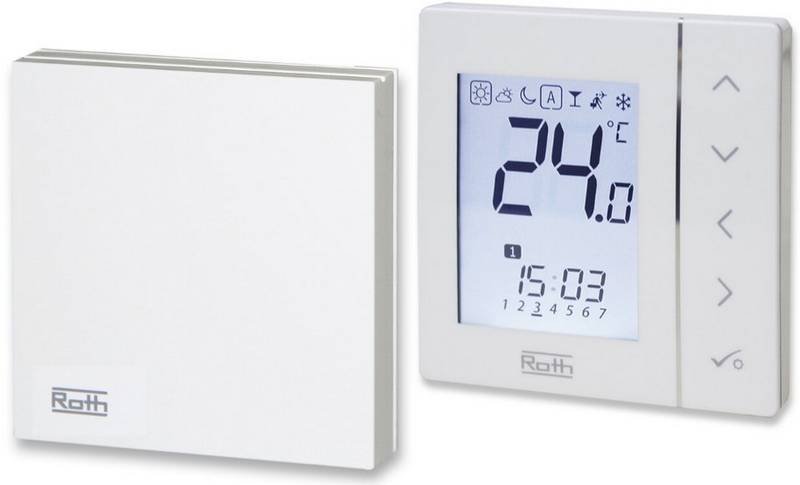
namron 4512737 Touch Zigbee 16A Thermostat Instruction Manual
| General | Details |
|---|---|
| Name | namron 4512737 Touch Zigbee 16A Thermostat Instruction Manual |
| Make | NAMRON |
| Language | English |
| Filetype | PDF (Download) |
| File size | 0.47 MB |

namron 1402746 Touch Thermostat Instruction Manual

namron 4512738 Touch Zigbee 16A Thermostat Instruction Manual

namron 16A 2.0 Zigbee Touch Thermostat Instruction Manual

namron Touch Z Wave 16A Thermostat Instruction Manual

namron 4512737 Touch Zigbee 16A Thermostat Instruction Manual Overview
Summary of Contents
- Page 1: Instruction manual for Namron thermostat. Touch Zigbee 16A.
- Page 2: Instruction manual Namron termostat touch ZigBee 16A Technical data ZigBee frequency: 2.4GHz Operation voltage: 220-240V~50/60Hz Maximum load: 16A Power consumption: <2W Ambient temperature: 0°C to 40°C (during operation) Temperature range: 0°C to 40°C Hysteresis: 0.5°C to 2°C (default 0.5°C) IP rating: IP21 Relative humidity: 8% to 80%
- Page 3: Installation must be done by a qualified electrician. Power supply must be turned off during installation. Wiring diagram is provided for reference. Remove the display unit and front cover using a small screwdriver. Insert the wires to the correct terminals as presented in the wiring diagram. Suggested wire-stripping length is 8-10mm. Fix the thermostat into the connection box by tightening the screws. Ensure that the thermostat is fixed without deformation. Suggested torque for fixing is 0.2-0.4Nm (2.0-4.1kgf.cm). Symbol overview is included in the document.
- Page 4: Settings menu allows access to various configurations. To enter the settings menu, press and hold the up and down buttons for over 5 seconds while the device is off. The settings menu includes options like Preview menu, Zigbee settings, Schedule, Monitor settings, and Time/Date settings. To modify time and date, select TIME/DATE on the Home Interface and use the buttons to adjust values. The device can acquire local time from a bound device under specific conditions. If no operation occurs within 2 minutes, the device will enter standby mode. In standby mode, the display will turn off automatically after 30 seconds if the Display Auto Off function is enabled. Users can switch operation modes using the Home Interface buttons, with modes like Away, Auto, Manual, Drying, and Off. Away mode allows users to set specific times for leaving and returning home, controlling temperature accordingly. Auto mode schedule enables users to maintain desired temperatures during specified times.
- Page 5: Schedule setting method 2 allows quick access to the Auto Mode Schedule weekly setting interface. In Auto Day Schedule, you can modify time or temperature settings and save changes. The latter time in each schedule must be later than the former time to avoid a time setting error. Default time schedules include specific times and temperatures for weekdays and weekends. Manual Mode controls the heating system based on the current set temperature. Dry Mode Schedule can quickly heat a space to dry surfaces, with configurable duration and post-dry mode settings. Off Mode indicates the device is in idle status. Window Open Detect feature activates when room temperature drops below a set threshold to save energy. The window open mark will disable automatically after a set time or if the temperature rises. The monitor set interface allows real-time monitoring of overcurrent, overheating, and freezing conditions.
- Page 6: If current is over the set value, the relay will be forced to off by the device, and the state will be reported to the gateway. The over current alarm function can be disabled, which can be set directly through the device. When over current alarm is triggered, the beeper will beep. To cancel the alarm, just press and hold the button for over 3 seconds or reset power of the device. The alarm will be triggered when the floor sensor temperature exceeds the maximum floor temperature. The device will restore to previous operation mode after the floor sensor temperature is below the maximum floor temperature minus hysteresis. This function can be disabled, which can be configured directly through the device. Hysteresis enables the controller to control the relay only when the sensor temperature is lower than the set temperature minus the hysteresis value. Set the level of vibration sensor under the buttons or buzzer level. The OLED display brightness can be configured through the proprietary attribute of the Thermostat Cluster.
- Page 7: On the Home Interface, press and hold both buttons for Display Auto OFF function can be enabled or disabled. This Display Auto Off can also be configured through the proprietary attribute 0x100B of Thermostat Cluster. This parameter defines which sensor temperature will be displayed on Home page. The displayed temperature may have big tolerance caused by the sensor or other factors, so it is necessary to do temperature compensation to room sensor and floor sensor. Device state after reset power of the device can be set as “last status” or “default.” To ensure the safety of the device, if the internal temperature is over a certain value during heating process, the device will execute a short temporary action to turn off the relay. On the Home Interface, press and hold both buttons for over 10S to enable or disable the Child Lock.
- Page 8: Zigbee configuration introduction Select network set on home interface to enter into Zigbee network management interface. Operate your Zigbee gateway to add device, select “Add”, then short press button. If added successfully, “Status” will show “Inclusion OK” and device ID. Operate your Zigbee gateway to remove device, select “Remove”, then short press button. If removed successfully, “Status” will show “Exclusion OK” and device ID will be shown as 0. Factory resetting will remove the device from Zigbee network and all parameters will be restored to factory default setting. The device will start reset, “Status” will show “Reset...”. Zigbee does not have away mode; the attribute occupancy is required to judge whether it is away mode. The thermostat provides 3 Zigbee application endpoints.
- Page 9: Application Endpoint #1 – Thermostat Provides basic information about the device, such as the manufacturer ID, vendor and model name, stack profile, ZCL version, production date, hardware revision etc. Allows a factory reset of attributes, without the device leaving the network. Allows to put the endpoint into identify mode. Useful for identifying/locating devices and required for Finding & Binding. Allows adding this endpoint to one or more groups. Afterwards the endpoint can be addressed using the group address. Allows storing one or more scenes per group, where each scene consists of a pre-set on/off state value. Measuring power, voltage, current. Device related alarm. Thermostat User Interface Configuration. This is the firmware version number of the application. Hardware version 1.
- Page 10: GenericDevice-Class GenericDevice-Type ProductCode ProductURL Sw build id Reset to Factory Defaults Command resets all attributes to factory defaults. SceneCount holds the total number of scenes currently stored on the device. CurrentScene indicates the currently active scene if SceneValid is true. CurrentGroup indicates the currently active scene if SceneValid is true. SceneValid indicates if the scene identified by CurrentGroup and CurrentScene is currently active. Add Scene command adds a scene with or without a scene field set. View Scene command returns the scene field set, name, and transition times for a scene. Remove Scene command removes a scene from the scene table. Remove All Scenes command removes all scenes that belong to a particular group.
- Page 11: Store scene stores the device’s current state or updates a previously stored scene. Recall scene reverts the device’s current state using values from a previously stored field set. Attributes supported for groups include bitmap8, read-only, and NameSupport. Commands supported for groups include adding, viewing, removing, and removing all groups. The thermostat attributes supported include reportable local temperature and outdoor temperature. Local temperature is reported with a maximum resolution of 0.01 ºC. Occupancy indicates whether the space is occupied, affecting heating setpoints. Local temperature calibration has a range of -30 to 30 with a maximum resolution of 0.1°C. Occupied heating and cooling setpoints have specific ranges and default values. Unoccupied heating setpoint has a defined range and default value.
- Page 12: Control sequence of operation supports heating only. Indicates the relay on/off status, supports heat state. OLED brightness levels include low, mid (default), and high. Key beep volume and vibration levels can be off, low, or high. Select external floor sensor type with various NTC values. Referring sensor for heat control can be room, floor, or both. Device mode after power reset can be default or last status. Temperature compensation for external sensor ranges from -30 to 30. Duration of dry mode ranges from 5 to 100 minutes. Mode after dry mode can be off, manual, auto (default), or away.
- Page 13: Hysteresis setting, range is 5-50, unit is 0.1ºC, default value is 5. Max floor temp: Floor temperature over heating threshold, range is 0-35, unit is 1ºC, 0 means this function is disabled, default value is 27. Away Mode Set: Value=0: not away (default), Value=1: away. Setpoint Raise/Lower: Increase or decrease the set temperature according to current mode, unit is 0.1ºC. CurrentSummationDelivered: Indicates the current amount of electrical energy delivered to the load. Status: Flags indicating current device status, always is 0x00. UnitOfMeasure: The unit of metering data, this is always kWh(0x00). SummationFormatting: The decimal point on the left and right sides of the data, this is always 0x00. MeteringDeviceType: Metering data type, this is always Electric Metering (0x00). MeasurementType: Indicates the physical entities that this device is able to measure. Supports only bit0: Active measurement (AC).
- Page 14: AC voltage divisor is used to calculate the real displayed voltage. The formula for real displayed voltage is RMSVoltage * ACVoltageMultiplier / ACVoltageDivisor. AC current divisor is used to calculate the real displayed current. The formula for real displayed current is RMSCurrent * ACCurrentMultiplier / ACCurrentDivisor. AC power divisor is used to calculate the real displayed power. The formula for real displayed power is Active Power * ACPowerMultiplier / ACPowerDivisor. AC alarms mask specifies which configurable alarms may be generated. Current overload is indicated by Bit1 in the AC alarms mask. Over current value is set by the user and affects the ACCurrentOverload. The time cluster is based on UTC time since 1st January 2000.
- Page 15: Occupancy sensing attributes can be received, indicating whether the space is occupied or unoccupied. The occupancy attribute affects the HVAC cluster and operation mode. Thermostat user interface configuration supports various attributes, including temperature display mode and keypad lockout. Temperature display mode is represented as Enum8. Keypad lockout can range from no lockout to various levels of lockout. Application endpoint #2 supports OTA upgrades. OTA upgrades are pull-oriented and involve searching the network for servers. The server controls the upgrade process, including image selection and installation timing. OTA complies with the standard Zigbee protocol.
- Page 16: Page 16