Home > LUX > LUX TX9600TSA Smart Temp Universal 7 Day Programmable Touchscreen Thermostat Instruction Manual
LUX TX9600TSA Smart Temp Universal 7 Day Programmable Touchscreen Thermostat Instruction Manual
TX9600TSa
SMART TEMP® UNIVERSAL
7-DAY PROGRAMMABLE TOUCHSCREEN THERMOSTAT
(FOR BOTH CONVENTIONAL AND HEAT PUMP SYSTEMS)
INSTALLATION AND OPERATING INSTRUCTIONS
52138
IMPORTANT!
• Please read all of these instructions carefully before beginning
installation.
• Label every wire terminal designation on your existing thermostat wiring
before removing your old thermostat.
• Ignore the color of the wires since they may not comply with any
standard. Please connect wires using the terminal letter designations.
Thank you for your confidence in our product. To obtain the best results from
your investment, please read and follow the installation procedures carefully, and
one step at a time. This will save you time and minimize the chance of damaging
either the thermostat or possibly your heating and cooling system. These
instructions may contain information beyond that which may be required for your
particular installation.
CAUTIONS AND WARNINGS . . . . . . . . . . 2
SYSTEM COMPATIBILITY . . . . . . . . . . . . 3
FEATURES . . . . . . . . . . . . . . . . . . . . . . . 4
TOOLS YOU MAY NEED . . . . . . . . . . . . . . 4
MOUNTING LOCATION . . . . . . . . . . . . . . 5
REMOVE OLD THERMOSTAT . . . . . . . . . . 5
INSTALL THERMOSTAT BASE . . . . . . . . . 6
WIRING INFORMATION . . . . . . . . . . . . . . 7
WIRING DIAGRAMS . . . . . . . . . . . . . . . . 9
HARDWARE SETUP OPTIONS . . . . . . . . 18
COMPLETE THE INSTALL . . . . . . . . . . . 20
FRONT PANEL ITEMS . . . . . . . . . . . . . . 20
OPERATING INSTRUCTIONS . . . . . . . . . 21
TEMPERATURE PROGRAMS . . . . . . . . . 24
ADVANCED FEATURES . . . . . . . . . . . . . 25
BATTERY REPLACEMENT . . . . . . . . . . . 33
TECHNICAL ASSISTANCE . . . . . . . . . . . 34
LIMITED WARRANTY . . . . . . . . . . . . . . 34
MERCURY NOTICE . . . . . . . . . . . . . . . . 34
WARNING: Use Energizer® or DURACELL® Alkaline Batteries Only.
Energizer® is a registered trademark of Eveready Battery Company, Inc.
DURACELL® is a registered trademark of The Procter & Gamble Company
© 2013 LUX PRODUCTS CORPORATION. ALL RIGHTS RESERVED
| General | Details |
|---|---|
| Name | LUX TX9600TSA Smart Temp Universal 7 Day Programmable Touchscreen Thermostat Instruction Manual |
| Make | LUX |
| Language | English |
| Filetype | PDF (Download) |
| File size | 0.24 MB |

LUX TX700U Universal Thermostat Instruction Manual

LUX TX500Ub Non Programmable Thermostat Instruction Manual

LUX TX1500E Programmable Thermostat Instruction Manual

LUX CAG1500 SERIES Smart Temp Electronic Thermostat Instruction Manual

LUX PSP511A Smart Temp Electronic Thermostat Instruction Manual

LUX PSP511A Series Programmable 5-2 Thermostat Instruction Manual

LUX PSPH521 Series Programmable Heat Pump Thermostat Instruction Manual

LUX DHP2120 Battery Powered Non Programmable Digital Heat Pump Thermostat Installation Guide

CH200SA Versatile Deluxe Low Voltage Thermostat Installation Guide

LUX TH10 Heating Only Mercury FREE Manual Thermostat Instruction Manual

LUX TX9600TSA Smart Temp Universal 7 Day Programmable Touchscreen Thermostat Instruction Manual Overview
Summary of Contents
- Page 1: SMART TEMP universal 7-day programmable touchscreen thermostat installation and operating instructions. Please read all of these instructions carefully before beginning installation. Label every wire terminal designation on your existing thermostat wiring before removing your old thermostat. Connect wires using the terminal letter designations. These instructions may contain information beyond that which may be required for your particular installation. Cautions and warnings. System compatibility. Features. Tools you may need. Wiring information. Operating instructions.
- Page 2: Cautions and warnings: This thermostat requires batteries to operate and failure or sub-standard performance of the batteries may impair or prevent the correct operation of the thermostat. Use Duracell or Energizer alkaline batteries only for all LUX thermostats requiring batteries. Be sure to change the batteries at least once a year, or whenever you see the LO BATT indication on the screen. The electrical rating for this thermostat is 1.5 Amps per terminal, with a maximum total load of 3.0A for all terminals combined. The thermostat contains parts that may wear out through use and are susceptible to failure if over-loaded or used in a manner other than as indicated in the documentation. Check unoccupied residences regularly to ensure that all systems are operating properly. Electrical interference, static electricity, failure or substandard performance of batteries, wiring defects in the installation and/or characteristics of the connected HVAC devices may prevent the system from regulating heating and cooling as anticipated. The thermostat is a sensitive device and dropping the product can cause damage to critical components. Persons with physical or mental limitations may not be able to promptly respond to a malfunction of the heating/air-conditioning system. Read the instruction manual completely before installing the thermostat.
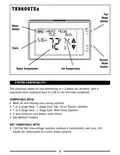
- Page 3: System compatibility: The electrical rating for this thermostat is 1.5 Amps per terminal, with a maximum total combined load of 3.0A for all terminals combined. Compatible with most 24-volt heating and cooling systems. Compatible with 1 or 2 stage heat / 1 stage cool: gas, oil or electric systems. Compatible with 1 or 2 stage heat / 1 stage cool: heat pump systems. Compatible with 3-wire hydronic (hot water) zone valves. Compatible with gas millivolt heaters. Not compatible with 120/240 VAC line-voltage systems (without a transformer).
- Page 4: Features include 1 or 2-heat / 1-cool, 7-day programming. Universal compatibility for all system types is provided. Each day of the week can be programmed separately. The device has easy-to-use touchscreen menu operation. Users can select periods per day (2 or 4) and choose between programmable or non-programmable operation. It features a LuxLight EL lighted display and an energy usage monitor. There is a programmable air filter life timer and a keypad lockout for unauthorized users. Additional features include manual temperature hold and adjustable vacation hold (1 to 30 days). Tools you may need include screwdrivers, wire stripper, wire cutter, and a drill with assorted drill bits for new installations.
- Page 5: Mounting location guidelines include placing the thermostat on an inside wall about 5 ft. above the floor. Avoid poor air circulation areas like corners or behind doors. Do not install the thermostat in locations with unusual heating or cooling conditions, such as direct sunlight or near heat sources. Ensure the thermostat is not placed in damp environments to prevent corrosion. Cover the thermostat during painting or construction work or wait until it is complete for installation. All wiring must comply with local codes and ordinances. Turn off electricity to all heating and cooling components before removing the old thermostat. Document the wiring connections by noting the letters and colors of each wire. Remove wires carefully to prevent them from falling back inside the wall. Loosen the mounting screws to remove the old thermostat from the wall.
- Page 6: Install thermostat base. Strip wire insulation leaving only 3/8 in. bare wire ends, and clean off any corrosion present. Fill the wall opening with non-combustible insulation to prevent drafts from affecting the thermostat’s normal operation. Separate new thermostat housing using your thumb and index finger. Route the wires through the opening in the new thermostat base plate, and hold the base against the wall. If the previous holes cannot be used, hold the thermostat base against the wall so that it appears straight and level. Mark for the new screw holes and attach the base to the wall using the screws provided. Use the supplied plastic anchors if needed when mounting to a soft material such as drywall.
- Page 7: Wiring information is crucial for proper installation. When attaching the wires to the thermostat, ensure that the bare wire ends are fully inserted into the terminal block while tightening the screw. This thermostat model is part of a family of similar models with the same general visual appearance. The wiring connections may have different terminal letters for different purposes. Do not interchange the back plates and/or thermostat front halves of other similar looking models. Interchanging components may cause undesired heating and/or cooling operation.
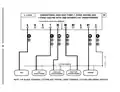
- Page 8: Wiring diagram notes are important to read before connecting wires. If the wiring diagrams do not match your system, refer to the technical assistance section before removing existing thermostat wiring. Dashed wires in the diagrams are optional or depend on your specific system type or brand. Terminal letters shown in black represent typical wiring applications, while gray letters indicate other possible designations. The optional C terminal powers the thermostat using the System Common wire, but is not necessary for heating and cooling to function. If your old thermostat has both Y and C wires, C is likely a System Common wire. For heat pump systems, use either the O or B terminal, but not both. Some heat pump systems have separate wires for AUX and Emergency electric heat; this thermostat uses the W2 terminal for both. If replacing a thermostat with a mechanical clock, tape off the clock power wires and do not connect them to the C terminal.
- Page 9: Wiring diagrams provide essential information for system types and descriptions. The document includes various conventional and heat pump configurations. Conventional heating systems can be 1-stage or 2-stage with different wire requirements. Cooling systems are categorized as 1-stage with specific wire configurations. Heating and cooling systems are detailed for both 1-stage and 2-stage setups. Two-transformer systems are also addressed with their respective wiring needs. Heat pump systems include configurations with auxiliary or emergency heat. Each system type is associated with specific page numbers for easy reference. The document outlines the necessary wiring for effective system operation. Clear distinctions are made between different stages and types of heating and cooling systems.
- Page 10: 2, 3, 4, 5 wires 1-stage or 2-stage, heating only Factory RH-RC jumper wire installed Fan wire may not be present in all systems Optional system common 2 stage 1 stage System 24V transformer Heater Note: The black terminal letters are typical, gray terminal letters are brand specific
- Page 11: Hot water heating only with a 3-wire zone valve. Factory RH-RC jumper wire installed. Open indicates heat on. Close indicates heat off. The black terminal letters are typical; gray terminal letters are brand specific. 3-wire zone valve configuration. System 24V transformer. Optional system common connections. Wiring configuration for heating system. Zone valve operation indicators.
- Page 12: 3, 4 wires 1-stage, cooling only Factory RH-RC jumper wire installed Note: The black terminal letters are typical, gray terminal letters are brand specific.
- Page 13: Conventional (non heat pump) 1-stage heating and 1-stage cooling. Factory RH-RC jumper wire installed. Typical terminal letters are black; brand specific terminal letters are gray. System common air conditioner. 24V transformer. Fan. Heater.
- Page 14: Conventional (non heat pump) 2-stage heating and 1-stage cooling Factory RH-RC jumper wire installed Typical terminal letters are black, brand specific terminal letters are gray.
- Page 15: Conventional (non heat pump) 1-stage heating and 1-stage cooling with two separate 24V transformers. Factory RH-RC jumper wire removed. The black terminal letters are typical, gray terminal letters are brand specific.
- Page 16: Single-stage heat pump system with no aux or emergency heat. Use “O” or “B” terminals, never both. Customer installed Y-W1 jumper wire. Factory RH-RC jumper wire installed. Black terminal letters are typical, gray terminal letters are brand specific. Reversing valve. System 24V fan. Heat pump transformer.
- Page 17: 5, 6 wires 2-heat / 1-cool, heat pump system with aux and emergency heat Use “O” or “B” terminals, never both Customer installed Y-W1 jumper wire Factory RH-RC jumper wire installed Note: The black terminal letters are typical, gray terminal letters are brand specific
- Page 18: Hardware setup options include a row of DIP switches on the thermostat's circuit board, labeled #1 through #7. The position of these switches affects thermostat operation and LCD display information. Changes to the switches are recognized only after adjusting the HEAT/OFF/COOL mode switch or pressing the HW RST button. Option switches should be moved carefully using small tools like an eyeglass screwdriver or toothpick. Switch #1 (System) is set to OFF for furnaces and ON for heat pump units. Switch #2 (Type) is OFF for programmable operation and ON for manual operation. Switch #3 (Periods) is OFF for four temperature program periods and ON for two periods. Each temperature program period has a separate start time and set temperature. The manual provides further details on advanced features related to the hardware reset button. Careful handling of the DIP switches is essential due to their small size.
- Page 19: Switch #4 (Scale): All temperature values are displayed using the Fahrenheit scale. This setting displays all temperature values using the Celsius scale. Switch #5 (Time): This setting displays the clock times and temperature program period start time values on the screen using US standard AM and PM values. This setting displays the clock and temperature program period start time values on the screen using the 24 HR military-time format. Switch #6 (Delay): This sets the minimum length of time that Heat or Cool must remain either On or Off before it will automatically switch to the alternate On or Off state. This internal delay prevents rapid cycling of your system and provides equipment protection particularly for cooling units. The 5-minute setting is fine for most applications. If you feel that your system may need to cycle more frequently than the thermostat is allowing, then you may use the 2-minute setting. Switch #7 (Recovery): The Early Recovery feature affects how the thermostat transitions from an energy saving setback program period to a comfort program period temperature. When this is disabled, the thermostat makes a set temperature change at the beginning of an upcoming period's start time. The Early Recovery feature will calculate the capability of your system and turn on the heating or cooling early. During the time that the thermostat is performing a recovery, the words “IN RECOVERY” will be shown.
- Page 20: Gas/electric slide switch (fan operation) is a physical component on the circuit board. The UP position (GAS, default) allows the heating system to control the blower fan automatically. The GAS setting is typically used for natural gas, propane, or oil furnaces and does not affect cool mode operation. The DOWN position (ELEC/HP) runs the blower fan when heat is called for, necessary for systems that do not control their own fan in heat mode. Heat pump systems and units with electric heating elements typically require the ELEC setting. Once hardware options are set, install two new AA size alkaline batteries. Ensure batteries are installed in the proper direction as per markings in the battery tray. Change the position of the HEAT/OFF/COOL System Mode switch to accept new hardware option settings if batteries were previously installed. The HEAT/OFF/COOL System Mode switch controls the heating and cooling systems. The AUTO/ON Fan Mode switch allows the blower fan to cycle automatically or run constantly, regardless of heating or cooling demand.
- Page 21: The Fan Mode switch only works if your system provides a wire for the thermostat’s “G” wire terminal. The Fan Mode switch has no effect in systems that do not have a blower fan. Operating instructions include touchscreen menu contents such as setting day/time and reviewing energy usage. You can set or review “heat/cool” programs, filter usage, and swing value. To set day and time, press the MENU button and follow the prompts to adjust the day and clock time. Basic operation of your heating or cooling system can be obtained by choosing either HEAT or COOL on the System Mode switch. Touch the Set Temperature digits on the screen to adjust the current Set Temperature. The thermostat will follow a default temperature routine until the clock has been set.
- Page 22: Heat mode and cool mode settings are displayed with specific temperatures for morning, day, evening, and night. On-screen indicators show when the thermostat is calling for heating or cooling. In heat mode, a flame icon indicates the system's status. A steady flame means the heating system is off, while a flashing flame indicates it is running. In cool mode, a snowflake icon indicates the system's status. A steady snowflake means the cooling system is off, while a flashing snowflake indicates it is running. Emergency heat mode can be activated with the EMER button in heat pump configurations. While in emergency heat, the display changes to Emer Heat, and the EMER button is highlighted. Emergency heat mode uses only the auxiliary heat source to prevent energy waste and potential damage to the heat pump. Refer to heat pump literature for specific operating characteristics and recommendations for using emergency heat mode.
- Page 23: LCD display backlight assists viewing at nighttime or in low light levels. A press on the touch panel lights the display for approximately 10 seconds. Any screen presses while the light is on reset the timer for an additional 10 seconds. Temperature override allows temporary changes to the set temperature. The set temperature returns to the programmed value when the next program period starts. HEAT OVRRIDE or COOL OVRRIDE will display during an override. An override can be canceled by pressing the HOLD button twice or switching the mode to OFF. The thermostat has a default internal time delay of 5 minutes to prevent system damage from frequent cycling. If heating or cooling does not activate immediately, wait at least 5 minutes. Temperature hold maintains a fixed set temperature indefinitely. To enter hold mode, press the HOLD button once. To cancel a hold, press the HOLD button again. The thermostat remains in hold mode after a power failure. It is advisable to install new batteries for reliable operation during extended hold periods.
- Page 24: Static notice: This thermostat is protected against normal static electric discharges. Temperature programs: By default, this thermostat has 4 separate program periods for both Heat and Cool mode: MORN, DAY, EVE, and NITE. The heat programs are set in HEAT mode, and the cool programs are set in COOL mode. If configured to use only 2 periods per day, the thermostat will only use the DAY and NITE periods. Programming in Cool mode is done in the same manner with the System Mode switch in the Cool position. Set temperature programs: Press the MENU button, then press the SCROLL button until “SET/REVIEW HEAT PROGMS” is shown. Use the UP and DOWN buttons to adjust the start time and set temperature for each program period. When the NITE period is finished, the thermostat will advance to Tuesday, with the MORN period start time flashing. Program copy feature: The Copy feature allows you to copy all of the program information from any one single day to any other day of the week. To copy heat programs, the thermostat must be in Heat mode, and to copy cool programs, it must be in Cool mode.
- Page 25: Press the NEXT button one time to select the day to copy from. Use the UP and DOWN buttons to select the day to copy to. A single short press of the COPY button will perform the copy. Specific days may be skipped by pressing the UP button. Press the EXIT button to return to the Normal Run screen. Swing setting, Offset setting, and Calibration settings need to be performed in a timely manner. The amount of variation from the desired set-point temperature is called the Swing. A smaller swing number makes the system cycle more frequently for precise temperature control. The swing setting range is between #1 and #9 in 0.25°F increments. The Offset setting affects the operation of the second heating stage, with a range from 0°F to 9°F.
- Page 26: Second heating stage to turn on. This setting can be used to conserve energy in situations where the second heating stage is more costly to operate when compared to the first stage. Cut-In / Cut-Out (1st Stage) 70˚F Set Temperature Swing Setting= #2 (+/- 0.5˚F) Offset Setting= 4˚F degrees (2nd Stage) Cut-In / Cut-Out ** = Only applies if a second heat stage is present
- Page 27: Temperature calibration description: The internal temperature sensor in this thermostat is accurately calibrated at the factory, and in most cases, alterations to this setting should not be needed. The temperature calibration feature allows you to manually offset the measured temperature by as much as plus or minus 5°F (3°C) degrees from its original value. To change the swing, offset, and calibration: Press the MENU button, then press the SCROLL button until “SET/REVIEW SWING VALUE” is shown on the screen. Use the UP and DOWN buttons to change the number value from #1 to #9. The 0° (zero) degree setting will disable the 2nd heating stage while in regular Heat mode. The setback feature is similar to both a temperature override and a temperature hold, in that both are used to maintain a fixed set temperature instead of following a programmed daily routine. A setback can be considered the same as a temperature override, which can last for a longer duration that you can adjust from 1-12 hours, or 1-30 days. By default, when a setback is activated in Heat mode, the set temperature used will be 5°F (3°C) degrees lower than the current set temp. For Cool mode, the set temperature used will be 5°F (3°C) degrees higher than the current set temp.
- Page 28: To start a setback, press the MENU button, then press the SCROLL button until “TEMPERATURE SETBACK” is shown, then press the OK button. Use the UP and DOWN buttons to set the duration for how long you would like to maintain a fixed set temperature (from 1 to 12 hours). If you would like to set the duration for longer than 12 hours, keep pressing the UP button. Once you have selected your desired setback duration, press the NEXT button to advance. Use the UP and DOWN buttons to select your desired set temperature that will be used during the setback duration. A setback can be cancelled by either pressing the HOLD button two times or by moving the mode switch to OFF, pausing briefly, then switching back to the HEAT or COOL position. There are two independent set temperature limit stops: a maximum heat set temperature and a minimum cool set temperature. The heat limit stop prevents the set temperature from being adjusted higher than the heat limit setting. Each of these temperature stops is user adjustable in one-degree increments, and these settings are protected by a selectable 2-digit code to prevent unauthorized tampering. By default, this 2-digit code is “00”, and the temperature stops can be used as-is with this code.
- Page 29: Setting the maximum set temperature for heat mode is outlined. Setting the temperature limit stop for cool mode is done in the same manner. Once a Temp Stop Lock Code is selected, it is used for both heat and cool temp stops. To set the temperature limit stop, press the MENU button and scroll to “SET HEAT TEMP STOP.” Enter the current Temp Stop Lock Code using the UP and DOWN buttons. If the code entered does not match, “WRONG CODE” will flash briefly. If the current code is entered correctly, you can change the Temp Stop Lock Code. Adjust the desired maximum heat set temperature value using the UP and DOWN buttons. To reset the temperature stop lock code to factory default “00,” change the System Mode switch to OFF and hold specific buttons for 10 seconds. The screen will show “00” to confirm the reset of the Temp Stop Lock Code.
- Page 30: Keypad lockout allows you to lock the touch-panel buttons to prevent unauthorized tampering of your thermostat settings. These keypad lock instructions need to be performed in a timely manner, as the thermostat will timeout and automatically exit the keypad lock screens after approximately 10 seconds without a button press. To lock the keypad, the system mode switch must be in either the heat or cool position. Press the MENU button, then press the SCROLL button until SET KEYBOARD LOCK CODE is shown, then press the OK button. Select a 4-digit code that you would like to use for locking the thermostat. Pressing the OK button will lock the thermostat touch panel using the 4-digit code shown on the screen. To unlock the keypad, press the padlock icon, and the words UNLOCK KEYBOARD? will appear at the top of the screen. You will need to enter the proper unlock code that was used for initially locking the thermostat. If you forget your keypad lock code, remove the front portion of the thermostat from the wall and briefly press the HW RST HARDWARE RESET button on the thermostat circuit board. The air filter monitor assists you with keeping track of proper maintenance and/or periodic replacement intervals for your system’s filter.
- Page 31: The air filter monitor counts the duration of filter usage since the last reset. This feature is for information purposes only and does not affect equipment operation. When the filter usage duration expires, CHANGE FILTER will appear on the display. To access filter information, press the MENU button, then the SCROLL button until SET/REVIEW FILTER USAGE is shown. The filter usage count will display the total hours since the last reset. To reset the filter counter, press the OK button when prompted. The adjustment range for filter limit settings is from 0 to 2000 hours, with 720 hours as the default. A setting of 0 hours disables the filter monitor feature. Air filters are sold based on their rated days, with one day of run time considered as 8 hours. For a 90-day filter, use a limit setting of 720 hours; for a 30-day filter, use 240 hours. The thermostat contains a timer that records the on-time for heating and cooling systems, displaying run time for today, yesterday, and total cumulative run time since the last reset.
- Page 32: Viewing the energy usage while in heat mode is possible. Information is accessed in the same manner in cool mode. To view the energy usage timers, press the MENU button and scroll to “REVIEW HEAT ENERGY USAGE.” The display shows “TODAYS ENERGY USAGE” along with the heating system runtime. Use the NEXT button to cycle between Today’s Usage, Yesterday’s Usage, and Total Cumulative Usage for heat mode. The timer records up to a maximum of 99 hours and 59 minutes. Pressing NEXT after Total Cumulative Usage will prompt “TOTAL USAGE RESET?” Pressing OK at this screen will clear the Heat Energy Usage timer. The Hardware Reset button is located on the circuit board below the battery holder. A Software Reset erases all heating and cooling temperature programs and user-adjustable values.
- Page 33: Compressor protection bypass allows temporary disabling of built-in compressor protection delays for diagnostics and testing after installation. To activate the feature, switch the System Mode to OFF and hold the OK button for at least 5 seconds. The thermostat will beep to confirm activation, disabling all compressor protection delays for 5 minutes. After 5 minutes, the thermostat will automatically return to normal operation. Battery replacement is necessary at least once a year for reliable operation. Batteries should be replaced sooner if the LO-BATTERY icon appears on the display. The batteries are located on the back of the thermostat at the top of the circuit board. New batteries should be brand new Energizer or Duracell “AA” size alkaline batteries. Observe polarity markings in the battery compartment for proper installation. After replacing batteries, align the front and back of the thermostat and press together to secure.
- Page 34: Technical assistance is available for installation or usage problems. Contact the Technical Assistance department during regular business hours for help. Online technical assistance is available anytime on the company website. The limited warranty covers defects in materials or workmanship for three years. The warranty does not cover damage from accident, misuse, or improper installation. Implied warranties are limited to three years from the original purchase date. Return malfunctioning units to the purchase location with proof of purchase. Purchaser assumes risks for incidental and consequential damages from use. Mercury is a hazardous material; follow local guidelines for disposal. It may be illegal to dispose of mercury-containing thermostats in the trash.
- Page 35: Page 35