
ecobee M5A Smart Wi-Fi Thermostat User Guide


What do my thermostat's wire labels mean?
Common thermostat wires:
Label
C
Description
Also known as the common wire, the C wire enables the continuous flow of 24VAC power that ecobee
thermostats need to operate.
Don’t see a C wire? There might be an extra wire tucked in the wall behind your thermostat’s backplate that
you can utilize as the C wire. That is provided it’s connected to the C terminal on your furnace/air handler
control board. The C wire might also be labelled as the X or B wire. You’ll have the opportunity to safely check
for a C wire during installation when your system is powered off.
Still no C wire? You can probably still install an ecobee with the Power Extender Kit (included with ecobee
thermostats), or in other less common setups, with other customizations we can walk you through at the time.
Heating and cooling system power wire.
R
If you only have one R wire (That includes R, Rc, and Rh), you’ll insert it into the Rc terminal on your ecobee.
Do not jumper any R wires!
If you don’t have an Rc wire, Rh serves as both the heating and cooling power wire.
RH
RC
With dual-transformer systems you’ll have two R wires—one from the cooling transformer (Rc) and one from
the heating transformer (Rh). Learn how to install an ecobee thermostat in a dual-transformer system.
If you don’t have an Rh wire, Rc serves as both the cooling and heating power wire.
With dual-transformer systems you’ll have two R wires—one from the cooling transformer (Rc) and one from
the heating transformer (Rh). Learn how to install an ecobee thermostat in a dual-transformer system.
In a conventional system, W/W1 controls your heating system and, where applicable, W2 controls your
heating system’s second stage, which helps warm the home faster.
W/W1 &
W2
If you have a heat pump system with auxiliary heating, you’ll normally connect the AUX/AUX1 or W2 wire to
the ecobee’s W1 terminal. If you have two stages of AUX heat, you will connect AUX2 to W2 on your ecobee.
In conventional cooling systems, Y/Y1 controls the first stage of cooling and Y2 controls the second stage,
which helps cool down the home faster.
Y/Y1 & Y2
In heat pump systems, Y1 controls your compressor, which heats and cools your home. If you have a two-
stage compressor, Y2 controls your compressor’s second stage, allowing for different levels of heating and
cooling.
G or G1 controls your furnace/air-handler fan.
G or G1
O/B
On heat pump systems, O/B controls the reversing valve, which tells your compressor to switch between
heating and cooling.
Some thermostats for heat pumps have an E terminal, which toggles emergency heat on or off. Emergency
heat should only be used on very cold days when the heat pump is unable to keep the house warm. The E
wire normally connects to the ecobee’s W1 terminal.
E
Heat pumps systems sometimes have a second, auxiliary heat source that helps warm your home quicker and
keeps the home warm in frigid weather conditions when the heat pump cannot. Some auxiliary heat systems
for heat pumps have two stages, hence AUX2.
AUX/AUX1
& AUX2
If you have a heat pump system with auxiliary heating, you will normally connect the wire labelled AUX/AUX1
or W2 to the ecobee’s W1 terminal. If you have two stages of AUX heat, connect the AUX2 wire to the
ecobee’s W2 terminal.
25 Dockside Drive, Suite 700
Toronto, ON M5A 0B5
ecobee.com

| General | Details |
|---|---|
| Name | ecobee M5A Smart Wi-Fi Thermostat User Guide |
| Make | Ecobee |
| Language | English |
| Filetype | PDF (Download) |
| File size | 2.48 MB |
 (1 votes, average: 5.00 out of 5)
 Loading...


Global Sources WT598 1T1 Smart Thermostat Instructions

Honeywell T874H Multistage Thermostat Instruction Manual
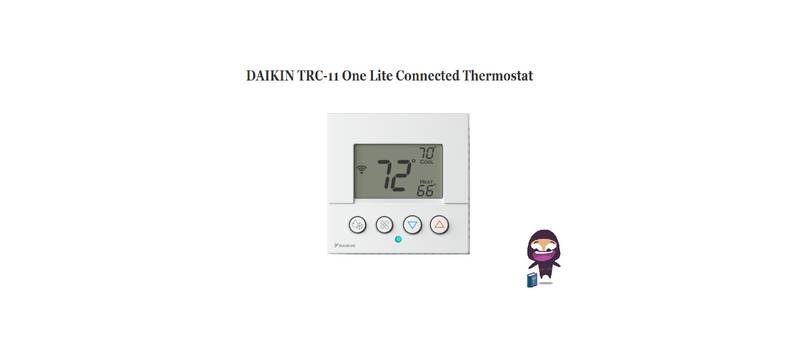
DAIKIN TRC-11 One Lite Connected Thermostat Instruction Manual

EMOS P56201BUF Floor Heating Thermostat User Guide

sensi ST765470 Thermostat Installation Guide

Honeywell DT4 Room Thermostat User Manual

SAVANT CLI-W220X-00 Multistat Smart Thermostat User Guide

hansgrohe 10717000 AXOR STARCK X Highflow Concealed Thermostat Instruction Manual

SALUS CONTROLS SQ610 Quantum Smart Thermostat User Guide

MAGNUM FIRST M9-TS1 24 Volt Intelligent Thermostat Owner’s Manual