Home > Lutron > LUTRON 653 Right Thermostat Control Datasheet

LUTRON 653 Right Thermostat Control Datasheet
Application Note #653  
Revision E  
August 2022  
Choosing the Right Lutron Thermostat Control  
Overview  
HVAC control is one of the primary benefits of the Lutron Residential Systems offering. Lutron thermostat controls improve  
the overall efficiency of a home and enhance temperature control. Basic knowledge of an HVAC system is helpful in  
choosing the correct Lutron thermostat control for each application.  
This document outlines recommended processes for determining which Lutron thermostat control is best suited for a  
particular application. These processes help identify various resources that can aid in the decision making process and  
serves to define key terms in the HVAC industry.  
Table of Contents  
New Construction or Retrofit Application.................................................................................................2  
Identifying HVAC Equipment.........................................................................................................................3  
Locate the HVAC Equipment Installation Manual.........................................................................................4  
Find the Existing Thermostats and Check the Connections Used..............................................................6  
Read the Installation Manual for the Recommended Thermostats.............................................................7  
Number of HVAC Zones.................................................................................................................................8  
Features Desired By the End User..............................................................................................................9  
Glossary of Key Terms .................................................................................................................................10  
Frequently Asked Questions (FAQs) .........................................................................................................12  
Appendix A - L-HWLV2-WIFI Diagram......................................................................................................13  
Appendix B - Nest Learning Thermostat Diagram................................................................................14  
Appendix C - HomeWorks Palladiom Thermostat Diagram ...............................................................15  
Appendix D - Common Heating Systems in the U.S.A. .......................................................................16  
1
GeneralDetails
NameLUTRON 653 Right Thermostat Control Datasheet
MakeLutron
LanguageEnglish
FiletypePDF (Download)
File size0.5 MB
Download PDF
1 Star2 Stars3 Stars4 Stars5 Stars (1 votes, average: 5.00 out of 5)
Loading...

LUTRON 653 Right Thermostat Control Datasheet
Get the free PDF manual for the LUTRON 653 Right Thermostat Control Datasheet and access setup steps, usage instructions, and troubleshooting tips. 👉 View online or download now to keep your thermostat running smoothly!

LUTRON 653 Right Thermostat Control Datasheet Overview
Summary of Contents

  • Page 1: Choosing the right Lutron thermostat control is essential for HVAC efficiency and temperature management. Basic knowledge of HVAC systems aids in selecting the appropriate thermostat control. The document outlines processes for determining the best Lutron thermostat for specific applications. It identifies resources that assist in the decision-making process. Key terms in the HVAC industry are defined for better understanding. Sections include new construction or retrofit applications, identifying HVAC equipment, and checking existing thermostats. It emphasizes reading installation manuals for recommended thermostats. Consideration of the number of HVAC zones is important in the selection process. User-desired features play a significant role in choosing the right thermostat. The document includes a glossary of key terms and frequently asked questions.
  • Page 2: Application note #653 New construction or retrofit application Most Lutron thermostat control solutions can be easily installed in a new construction or retrofit application. If the Lutron thermostat control is to be installed in a retrofit application, there are no pre-install considerations since everything is typically installed already. New construction is convenient because the walls are open and easily accessible. Ensure that the proper wire size and number of conductors are run from the HVAC equipment to the thermostat locations. Lutron thermostats use 18 AWG to 22 AWG solid wire. In an application where a heat pump will be used, make sure that 7 conductors are installed. The HomeWorks Palladiom HVAC controller is typically mounted with the HVAC equipment. The Lutron wireless thermostat has an integrated temperature sensor. Having the correct number of conductors will ensure that there is enough wire to use either of the 24 V Lutron control options. This document will help to compare and contrast all of Lutron control solutions in order to help identify the right choice for every application.
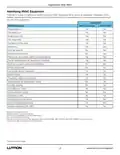
  • Page 3: Identifying HVAC equipment is crucial for determining the appropriate Lutron thermostat control. There are various methods to identify HVAC equipment types. The SMC55 controller is compatible with several HVAC systems. Single stage cooling and heating systems are supported. Two stage cooling and heating systems are also compatible. Packaged rooftop units and heat pumps can be identified. Dual fuel systems and geothermal heat pumps are included in the compatibility list. Variable speed fans and multi-zone systems are controllable. Humidity sensing and control options are available for certain systems. Remote temperature sensing and outdoor temperature sensing are features for specific HVAC configurations.
  • Page 4: Identifying HVAC equipment is essential for proper installation. The installation manual provides critical information such as equipment type, number of stages, and control wiring. If the manual is not available, locate the manufacturer and model number to find it online. All installation phases must comply with national, state, and local codes. These instructions cover specific heat pump units and their requirements. Check for transportation damage upon uncrating the unit and report any issues. Avoid placing the unit where condensation may cause customer annoyance. Units should be elevated to allow for proper drainage and prevent ice buildup. Ensure the support pad is level and not in direct contact with any structure. Maintain adequate airflow by positioning the unit away from walls and shrubbery.
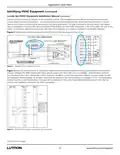
  • Page 5: Identifying HVAC equipment involves locating the installation manual. Control wiring is typically found later in the installation manual. The manual demonstrates how to connect the equipment to indoor thermostats. Connections required by the thermostat may indicate the potential for using a Lutron thermostat control. The wire connections can reveal if a proprietary communication protocol is used between the controls and the HVAC equipment. If a proprietary protocol is present, the use of Lutron or third-party alternatives is not possible. Examples of connection diagrams are provided in installation manuals. Typical thermostat connections from HVAC equipment to control are illustrated in the wiring diagrams. An example of an air conditioner/heat pump using a proprietary communication protocol is also shown. It is crucial to determine if an auxiliary device can be added for standard controls before proceeding.
  • Page 6: Identifying HVAC equipment is crucial in remodel or retrofit applications. Remove the thermostat from the wall to expose the wire connections on the rear. Take note of the connections being made and reference them in the provided table. The table contains common terminal designations for HVAC controls and equivalent Lutron thermostat control connections. Common wire connection is necessary for every application. “O” is used for most heat pumps to provide power for the changeover/reversing valve in cooling mode. “B” is used in Rheem or Ruud systems for the changeover/reversing valve in heating mode. Sensor connection requires both terminals; it is not a single terminal connection. Included with SMC55-RESI version 7302 or newer. For more information about specific terminology, refer to the glossary of key terms.
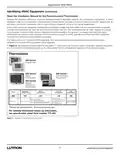
  • Page 7: Identifying HVAC equipment is crucial for proper installation and operation. Reading the installation manual for recommended thermostats is especially useful for new construction applications. A retrofit application often has a thermostat in the space that can be used to verify the connections. New construction applications do not have a thermostat installed and will not have limitations based on wiring as with retrofit applications. Despite recommendations, third-party thermostats can often be used, but it's prudent to consult an HVAC specialist or contact technical support. The best practice is to consult an HVAC specialist, look up recommended thermostats, and browse the thermostat installation manual for wiring diagrams. If a specific reference document is not mentioned in the installation manual, an online search can be completed to determine if that document exists. Different series of thermostats include 200-Series, 300-Series, 400-Series, and 500-Series, each with specific features. For detailed thermostat match-up information, see specification sheet form number T11-001. Photos are representative; actual models may vary.
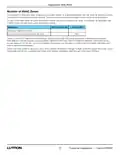
  • Page 8: Application Note #653 Number of HVAC Zones It is important to verify how many zones are in the HVAC system. In a retrofit application, this can easily be done by counting the number of thermostats currently installed. This is important to determine the right Lutron control for the application. All Lutron thermostat controls can control a single HVAC zone. An application with 3 HVAC zones will need three Lutron thermostat controls. There is a limit of 32 Palladiom thermostats per QS link. Each SMC55 controller requires one HomeWorks Palladiom thermostat. Up to four Palladiom thermostats can be used in a single zone. Lutron thermostat controls are compatible with non-Lutron zone/damper controllers.
  • Page 9: Application Note #653 Features desired by the end user When choosing a Lutron thermostat control, it's important to understand the HVAC control and features the customer requires. Key product features of Lutron thermostat controls include: Traditional thermostat look/feel Minimal space/visual impact 7 day scheduling Temperature averaging Remote temperature sensing Outdoor temperature sensing Third-party integration Humidity sensing Ventilation control Device interoperability
  • Page 10: Application Note #653 Glossary of Key Terms Air conditioner: A system using refrigerant to cool the air in the living space, where hot air passes over a coil and the refrigerant absorbs heat. Air handler: A device that moves cooled or heated air throughout the building via duct work. Auxiliary heat: A supplemental heat source, commonly electric, used in heat pump systems during extremely cold temperatures. Changeover/reversing valve: The connection that switches a heat pump system from heat to cool mode by reversing the flow of refrigerant. Emergency heat or auxiliary only mode: A feature in heat pump systems that activates a supplemental heat source when the heat pump is inoperative. Furnace: A device that generates heat for the living space and distributes it via air or water, using either electric elements or fossil fuels. Geothermal or ground source heat pump: A system that utilizes the Earth as a source of heat or heat sink, often referred to as a ground source heat pump. Heat pump: A system that uses refrigerant to both cool and heat the air in the living space, with processes that reverse depending on the mode. The switching between modes in a heat pump is performed using the changeover/reversing valve connection.
  • Page 11: Application Note #653 Glossary of Key Terms Line voltage baseboard heat is a system where a thermostat switches a baseboard electric heating element on or off based on room temperature and set point. Millivolt heat only refers to a heating system using gas-fired wall or floor heaters, requiring two wires for a special thermostat and producing small electrical voltage from the pilot light. Packaged units are outdoor-installed air handlers with built-in heating or cooling elements that generate air moved into the space via duct work. A split system air conditioner consists of two to five pieces, including an outdoor condenser and interior evaporator units, with an air handler moving air through the space. Stage indicates a level of operation for HVAC equipment, with single stage having one output level and multi-stage systems using low and high levels for efficiency. Temperature averaging allows a thermostat to receive multiple readings from various sensors, averaging them for a more even temperature in a zone. Zones improve system efficiency by splitting a home into smaller segments managed by the same thermostat, allowing targeted heating or cooling without affecting the entire system.
  • Page 12: Application Note #653 Frequently Asked Questions (FAQs) L-HWLV2-WIFI does not utilize Clear Connect technology. Instead, it uses a wireless network connection to communicate with the Lutron system. The thermostat requires a Total Connect Comfort account with Honeywell to establish a cloud-to-cloud connection with the Lutron Connect bridge, RadioRA 3 processor, or HomeWorks QSX processor. L-HWLV2-WIFI requires a Lutron Connect bridge and the Lutron Connect mobile application. Other Honeywell Wi-Fi thermostats can integrate with RadioRA 2 or HomeWorks systems using the Total Connect Comfort account. The Nest Learning Thermostat integrates with RadioRA 2 and HomeWorks systems, requiring a Lutron Connect bridge and a Nest account. Palladiom thermostats and SMC55 controllers can control some LG and Mitsubishi VRF systems via their interfaces. HomeWorks systems include built-in support for CoolAutomation equipment for VRF system control. HomeWorks QS systems can integrate with VRF equipment via the Commander interface by North Building Technologies.
  • Page 13: Application Note #653 Appendix A - L-HWL V 2-WIFI Diagram Ethernet (wired LAN) Wi-Fi Mobile WAN WAN HomeWorks QSX Processor Lutron mobile application Can be substituted by a RadioRA 3 processor, RadioRA 2 main repeater or HomeWorks QS processor.
  • Page 14: Application Note #653 Appendix B - Nest Learning Thermostat Diagram Ethernet (wired LAN) Wi-Fi Mobile WAN WAN Lutron Connect bridge Only one Lutron Connect bridge required per system (not one per processor). Can be substituted by a RadioRA 2 main repeater for RadioRA 2 systems. Both the Connect bridge and HomeWorks QS processor could be substituted by a RadioRA 3 processor or HomeWorks QSX processor.
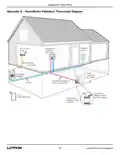
  • Page 15: Application Note #653 Appendix C - HomeWorks Palladiom Thermostat Diagram Palladiom keypad HomeWorks Palladiom thermostat Wi-Fi/wired router HVAC equipment (by others) HomeWorks processor HomeWorks QSX Processor HomeWorks Palladiom HVAC controller link Lutron mobile application HomeWorks Palladiom HVAC controller signals
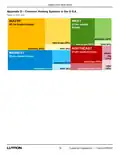
  • Page 16: Application note #653 Appendix D - Common heating systems in the U.S.A. Based on 2015 data
  • Page 17: Application Note #653 Lutron, HomeWorks, RadioRA, Clear Connect, Lutron Connect, RadioRA 2, and Palladiom are trademarks or registered trademarks of Lutron Electronics Co., Inc. in the US and/or other countries. All other product names, logos, and brands are property of their respective owners. Lutron contact numbers are provided for various regions including USA, UK and Europe, and Asia. Technical support contact information is available for different regions. Customer assistance numbers are listed for North and South America, including specific numbers for Mexico and Central/South America.